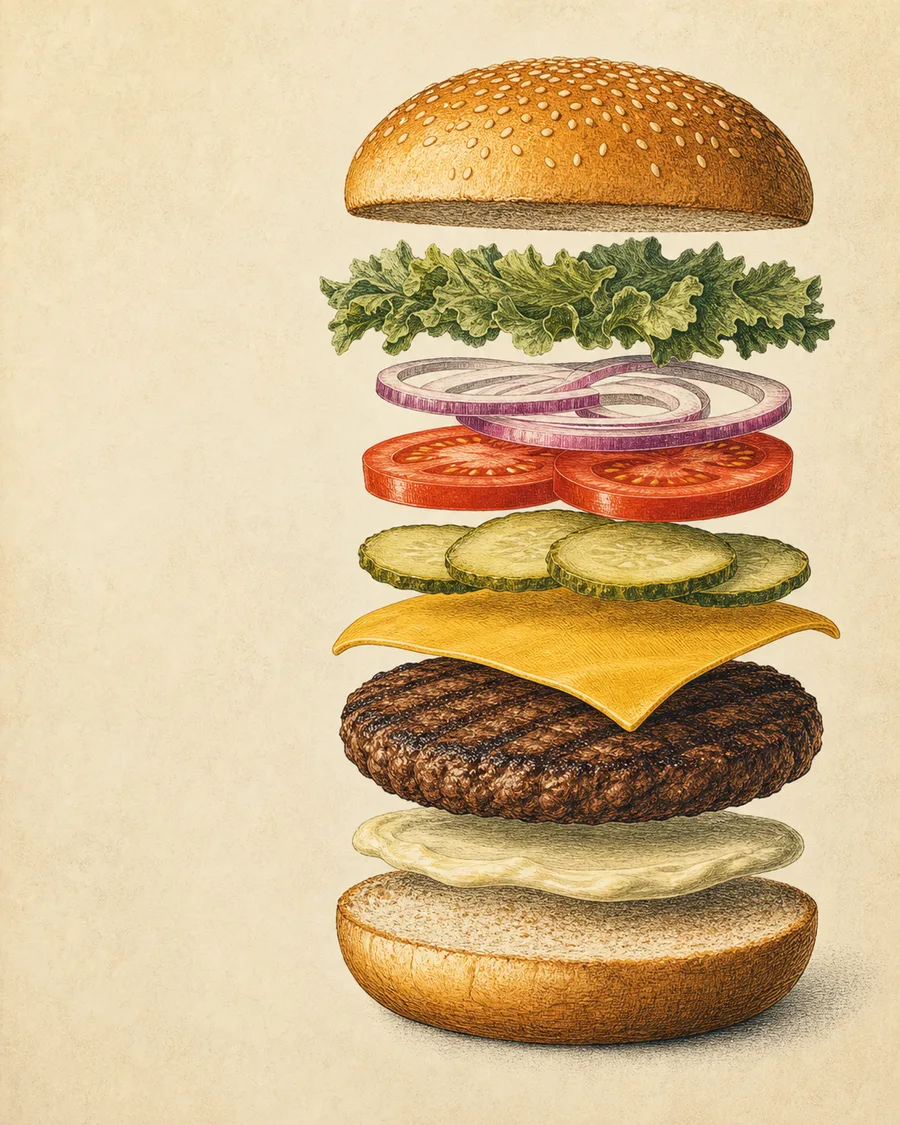
An exploded hamburger with the top bun, vegetables, cheese, patty, sauce, and bottom bun separated into visible layers.

First, the buns

Without the bread, it is just a salad

Salads are good. They have their place. But right now, we are making a sandwich, and we need buns to hold it all together.

  1. Top bun Topic sentence

    Introduces the idea the paragraph will build and defend.

  2. Toppings Historical analysis

    Connects the factual information and gives the paragraph its unique flavor.

  3. Meat Factual information

    Provides the substance that makes historical analysis possible.

  4. Bottom bun Conclusion

    Allows the paragraph to sit nicely on the plate and become part of the whole meal: the essay.

The Buns Hold It Together

The topic sentence and conclusion have similar jobs, but they are not interchangeable.

Notice that the buns are similar. They are both made of bread, and both have the job of holding the sandwich together. But they are distinct as well.

The top bun introduces the paragraph. The bottom bun, the conclusion, is flat. It allows the burger to sit nicely on the plate and become part of the whole meal, the entire essay.

The Heart and Soul Is the Meat

One cannot do historical analysis without historical facts to analyze.

The factual information is the heart and soul of a history paragraph. One of the biggest problems students have when they begin writing historical essays is that they do not have enough factual information to analyze.

If they do try to make a burger, they end up with a lot of bread and hardly any meat.

Often, students turn in a grandiose topic sentence and a likewise complex conclusion with a small sliver of bacon in between.

The Toppings Make It Your Own

A patty between two buns meets the technical definition of a hamburger, but it is really missing something.

The toppings make the hamburger one’s own creation. In the same way, historical analysis makes historical writing one’s own.

A paragraph containing only factual information is dry and boring. It is little more than a bulleted list. Analysis connects the seemingly isolated meat and bun and gives the burger its unique flavor.

Toppings

Explain the Connection

Show how the factual information supports the paragraph’s point.

More flavor

Explore the Significance

Explain why the evidence matters within the historical question or argument.

Original analysis

Make It Your Own

Develop an interpretation grounded in knowledge rather than repeating an idea you cannot defend.

A Little Seasoning

As writers practice and become more capable, they recognize more nuanced ways to explore and articulate historical arguments. Unfortunately, we all want to be the gourmet chef without putting in the work.

We see spices on the shelf without really understanding whether they go together. As historical analysis grows stronger and draws from more factual information, a writer can add a pinch of salt and pepper, or other spices that create great flavor.

Using big words or writing in a convoluted way to “sound smart” does not have the desired effect.

Start cooking

Create your own historical essay

We may not be gourmet chefs, but we can all begin to create our own unique hamburgers. We may not all be historians, but we can all create our own unique historical essays.

Build a Stronger Argument